
US Secretary of State Marco Rubio has characterised the strategic alignment between India and the United States as "extraordinary", emphasising that both nations have an opportunity to shape the course of the 21st century through partnership.

Indian government sources revealed that a 'cautious approach' was adopted during Prime Minister Narendra Modi's June talks with then-US President Donald Trump due to concerns over Trump's 'unpredictable behaviour' with foreign leaders, leading to a preference against a joint media interaction.

In reflection of their growing congruence in areas of defence and security, the two sides, following the Modi-Mitsotakis talks, agreed to set up an institutional dialogue at the level of national security advisors, and boost defence industrial cooperation.

Prime Minister Narendra Modi concluded his three-nation tour in New Zealand, where he and his counterpart Christopher Luxon elevated bilateral ties to a strategic partnership. The visit focused on doubling trade by 2030 and expanding cooperation in the Indo-Pacific region, marking the first visit by an Indian PM in 40 years.

External Affairs Minister S Jaishankar visited Kyiv, reiterating India's readiness to assist in ending the Ukraine-Russia war. He emphasised that solutions would not emerge from the battlefield and highlighted Prime Minister Modi's call for an end to the conflict. Discussions also covered humanitarian aid, the impact on commercial shipping, and bilateral trade, with Jaishankar inviting his Ukrainian counterpart to India for further talks.

'Tariff action relating to the excess-capacity investigation will be even more susceptible to judicial overturn.'

US Secretary of State Marco Rubio's visit to India this week underscores the complex dynamics of global energy policy, as Washington re-evaluates sanctions on Russian oil buyers amidst India's continued reliance on Russian crude.

Prime Minister Manmohan Singh's visit to the US could greatly enhance economic ties between the two countries, industry body PHDCCI said on Monday.
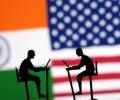
Commerce and Industry Minister Piyush Goyal announced that a US team is expected to visit India next month for trade talks, following an earlier Indian delegation's visit to Washington, DC, in April to finalise an interim pact and advance negotiations for a broader bilateral trade agreement.

External Affairs Minister S Jaishankar stated that the stability of the Line of Actual Control (LAC) is essential for normalising India-China relations, asserting that border disturbances will have consequences. He connected trade and investment growth to border peace and highlighted significant economic issues, including a severe trade imbalance and lack of market access for India in China. Jaishankar also referenced the 2020 Galwan clashes as a critical turning point, underscoring the profound impact of border tranquillity on the overall bilateral relationship.

US President Donald Trump lauded Prime Minister Narendra Modi as a "very tough negotiator" and hinted at a future visit to India during their meeting on the sidelines of the G7 Summit, where they discussed trade, defence, and the West Asia crisis.
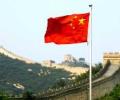
Beijing's increasing influence in immediate neighbourhood of India has made it a bit nervous, but bilateral trade between the two Asian giants would be the stabilising force in Indo-China relationship, a noted American expert on China has said.

Bilateral trade between India and Japan stood at $16.31 billion by the end of fiscal 2013-14.

Rahul Gandhi, Leader of Opposition, met Malaysian Prime Minister Anwar Ibrahim for a breakfast meeting in New Delhi to discuss India-Malaysia relations. The meeting, also attended by Priyanka Gandhi Vadra, followed earlier talks between PM Narendra Modi and Ibrahim on trade, semiconductors, infrastructure, and defence. Malaysia is a key partner for India within BRICS and ASEAN.

The Reserve Bank of India (RBI) is exploring ways for Russian trade counterparts to use accumulated Indian rupees (INR) for imports or capital investments in India, aiming to boost INR-Rouble transactions and reduce reliance on the US dollar.

Chinese President Xi Jinping's first visit to India in seven years for the BRICS Summit and bilateral talks with Prime Minister Narendra Modi is set to address crucial aspects of India-China relations, including trade, investment, and persistent border tensions.

Beijing published the world's first global framework for vocational standards. If India does not act swiftly, it will be compelled to certify its workers by someone else's rulebook, cautions Abhay Jere, ex-Vice Chairman, AICTE.
Terming India's ties with the ASEAN as a 'pillar' of its 'Look East' policy, Prime Minister Manmohan Singh on Wednesday proposed a bilateral trade target of $50 billion by 2010 and sought boosting of cooperation with the key ten-member grouping in technology, health care, climate change and tourism.

Bilateral trade between India and Pakistan may touch USD 10 billion by 2015, if trade and investment barriers are removed, CII said.

India and the US are expected to sign the first phase of a bilateral trade agreement by mid-March, which will result in the US lowering import duties on Indian goods. India will then begin reducing import duties on certain US goods.
India and the US are expected to sign the first phase of a bilateral trade agreement by mid-March, which will result in the US lowering import duties on Indian goods. India will then begin reducing import duties on certain US goods.

In recent years, China and Russia have pushed for de-dollarisation within BRICS, which India has resisted. One reason is that India does not want to hurt its relationship with the United States, and another is the fear of China controlling trade because the renminbi is considered the strongest currency in the bloc today.

Industry bodies representing alcoholic beverage manufacturers have welcomed the India-UK Free Trade Agreement (FTA), which will see tariffs on UK whisky and gin reduced, boosting bilateral trade and supporting premiumisation. However, domestic manufacturers are calling for state governments to withdraw concessions currently enjoyed by imported liquor brands.

Prime Minister Narendra Modi and US President Donald Trump exchanged pleasantries and held a brief conversation at the G7 summit, their first in-person encounter in 16 months, setting the stage for high-stakes bilateral talks amidst continuing strain in India-US relations.

Iranian President Masoud Pezeshkian arrived in New Delhi for the BRICS summit, where he is scheduled to hold bilateral talks with Prime Minister Narendra Modi to enhance trade and strengthen overall relations. His visit is particularly significant given the heightened tensions in West Asia and recent US economic sanctions against Iran. Pezeshkian highlighted BRICS' role in fostering economic resilience and reducing dependence on the US dollar, while the summit itself aims to address global challenges and bolster collective resilience in critical sectors.

Russia on Monday assured India of uninterrupted supply of energy and fertilisers amid disruption caused by the West Asia crisis, as External Affairs Minister S Jaishankar met President Vladimir Putin in Moscow and held talks with his key interlocutors.

External Affairs Minister S Jaishankar highlighted that India's primary concern regarding terrorism from its neighbour, Pakistan, if not fully appreciated by partners like the US, negatively impacts bilateral relations. Speaking at the Asia Society, Jaishankar discussed the turbulence in India-US ties, particularly in light of Washington's renewed engagement with Pakistan and the perceived lack of empathy for India's terrorism concerns, especially under the second Trump administration. He emphasized that addressing these sensitivities is crucial for improving the relationship.

Prime Minister Narendra Modi conveyed to Chinese President Xi Jinping that peace and tranquillity along the frontier remains an "essential" basis for the development of India-China relations, even as the two leaders welcomed "steady progress" in bilateral ties during their talks on the sidelines of the BRICS summit.
Chief negotiators from India and the US are set to begin three-day talks in Washington to recalibrate the bilateral trade agreement (BTA) framework, following significant changes in the US tariff landscape, including a new 10 per cent tariff imposed on all countries.

Indian benchmark indices Sensex and Nifty rebounded in early trade, recovering from previous losses, driven by softening crude oil prices and renewed buying interest in blue-chip stocks. Analysts note that the fall in Brent crude below USD 77 has removed significant macro headwinds for India, contributing to market stability.

Chinese President Xi Jinping's upcoming visit to India for the BRICS summit is a pivotal diplomatic event poised to significantly impact bilateral ties and global cooperation amidst ongoing international instability.

India has strongly criticised the US decision to suspend the Permanent Labor Certification (PERM) program for eight major IT firms, including Indian giants like TCS and Wipro. New Delhi also condemned US Vice President JD Vance's description of foreign professionals as "indentured servants," calling it "unwarranted and deeply offensive." The move is expected to impact thousands of Indian tech professionals seeking permanent residency in the US and further strains bilateral ties.

India and Canada aim at achieving a bilateral trade target of $15 billion in the next five years, even as both countries are beginning a series of negotiations to have a Comprehensive Economic Partnership Agreement (CEPA) soon that would yield significant economic benefit for both countries and lower tariffs over a large number of products, says Peter Van Loan, Minister of International Trade, Canada.

President Trump is celebrating the US-India trade deal as a landmark achievement, with a major focus on boosting American coal exports to India and other trade partners.

Finance Minister Nirmala Sitharaman stated that India is likely to sustain economic growth of 7 per cent or more in 2026-27, continuing the pace recorded since the Covid-19 pandemic, despite geopolitical uncertainties and supply-chain disruptions.

India's national security adviser was in Dhaka for roughly three-quarters of the day on Thursday to prepare the ground for Bangladesh Prime Minister Tarique Rahman's visit to New Delhi.

Prime Minister Narendra Modi arrived in Sweden to hold talks on trade, technology, defence and other key sectors with his Swedish counterpart Ulf Kristersson.

Chinese President Xi Jinping's arrival in Washington marks a pivotal moment for global diplomacy, as he advocates for a "partners, not rivals" approach to US-China relations amidst high-stakes discussions on trade, technology, and international stability.

India has stated its commitment to protecting its economic interests and ensuring energy security after the US House of Representatives passed a bill allowing the US President to impose tariffs of up to 100 per cent on countries, including India and China, for purchasing Russian crude oil. The Ministry of External Affairs affirmed India's resolve to maintain diversified energy sourcing and has articulated its concerns to US interlocutors regarding the bill's potential implications.
